














For two years, the AI “revolution” has been part of our daily conversation. We’ve obsessed over how it writes emails, summarizes Zoom calls, and helps marketers spin up campaigns (and whether the em dash existed before AI). It’s been a massive win for the person with a standing desk and a double monitor.
But if you look at the data, we’re ignoring the most explosive ROI on the map.
The real transformation isn’t happening in the C-suite. It’s happening in the drive-thru, on the retail floor, and at the hotel front desk.
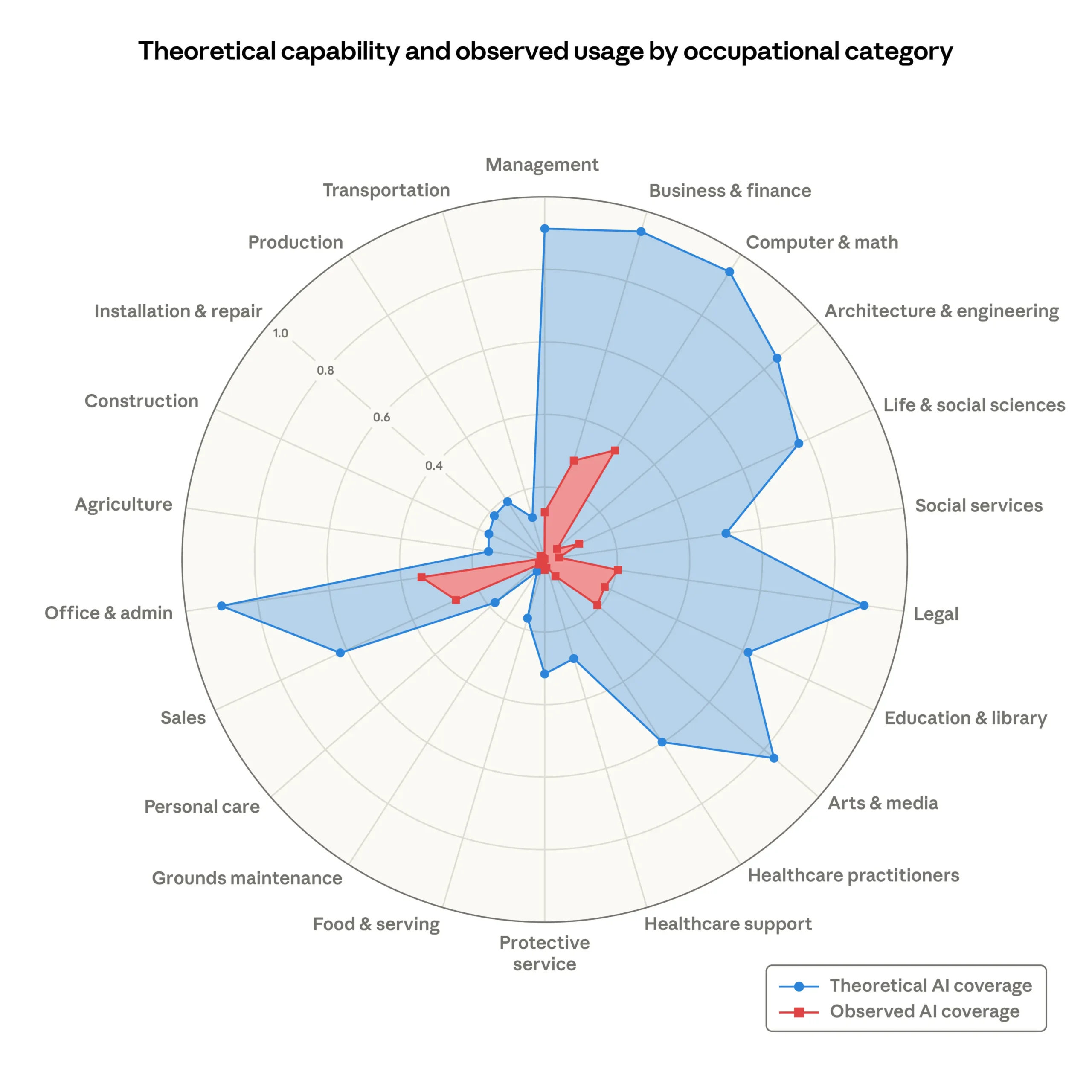
The Blue Gap Framework
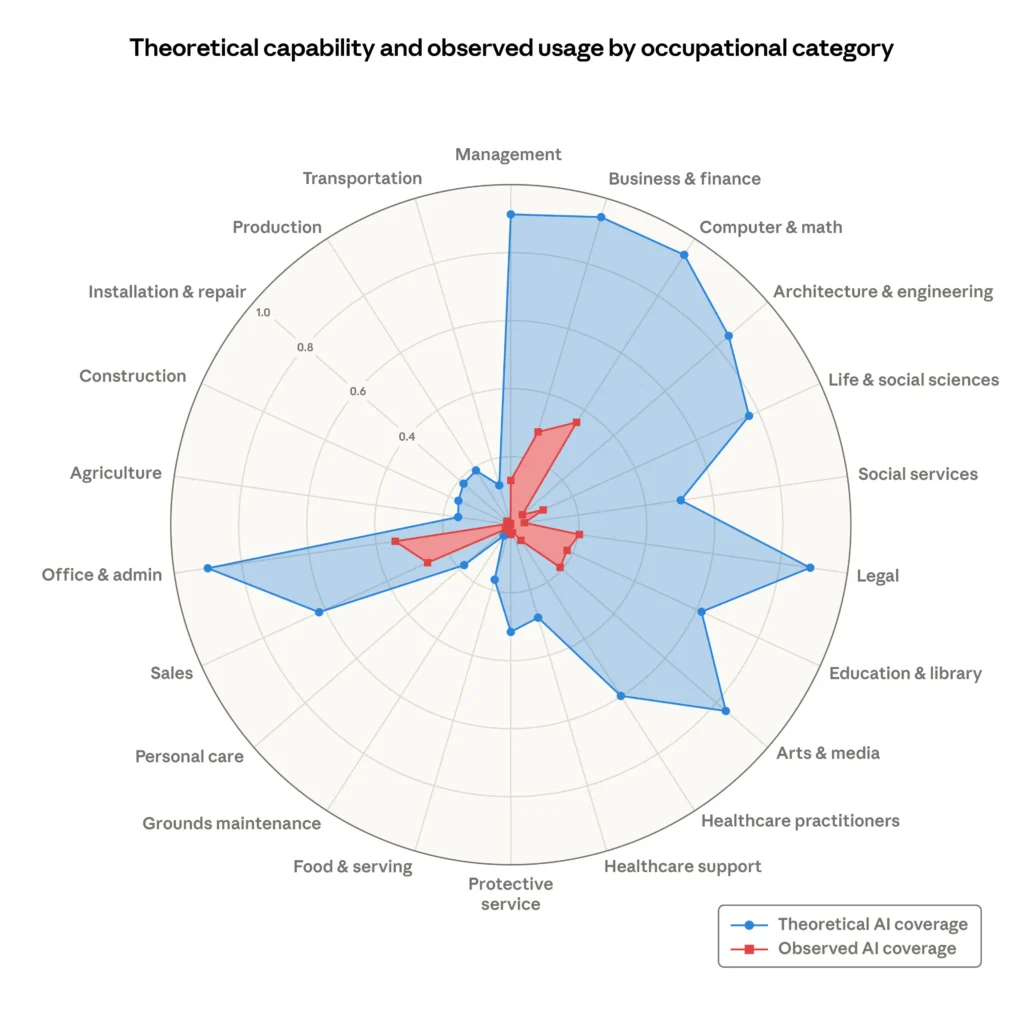
To understand where your company is leaving money on the table, you have to measure the Blue Gap.
- The Blue Zone (Theoretical Capability): This is what AI can do right now. It can translate a guest’s request in real-time, troubleshoot a broken industrial fryer, or predict a stock-out before the shelf is empty.
- The Red Zone (Observed Usage): This is what’s actually happening. In most frontline environments, it’s nearly zero. Employees are still relying on laminated checklists, 40-page PDFs, or “asking Dave because he’s been here three years.”
The Blue Gap is the canyon between the intelligence your company owns and the tools your employees actually use.
Solving the “Deskless” Friction Point
In industries like Hospitality, Retail, and FMCG, the Blue Gap exists because we’ve tried to force-feed frontline workers “office” tools.
A retail associate doesn’t have time to “prompt” a chatbot while a line of customers is forming. A line cook can’t “log in to a portal” to remember the specs for a seasonal special. When the delivery model is built for a desk, the technology becomes invisible to the person on their feet.
Where the 1% Multiplier Lives
Frontline work is defined by scale and frequency. This is where the math of AI becomes undeniable:
- In Restaurants: If AI helps a server suggest the perfect pairing or upsell 1% more effectively across 500 locations, that isn’t a “productivity hack”—it’s a massive revenue shift.
- In Retail: If a floor associate can instantly access “hidden” inventory knowledge without leaving the customer’s side, you stop losing sales to “I’ll check the back.”
- In FMCG: If a field rep can use AI to audit a shelf in seconds rather than minutes, they visit more stores. Execution becomes the competitive advantage.
Closing the Gap: From Discovery to Execution
The first wave of AI was about Discovery (finding information). The next wave—the Frontline Wave—is about Execution (doing the work).
Closing the Blue Gap requires three shifts in thinking:
- Zero-Click Intelligence: The information needs to find the worker, not the other way around.
- Micro-Knowledge: Kill the 2-hour training video. If a hotel housekeeper needs to reset a specific thermostat, they need a 10-second visual, not a “module.”
- The “Always-On” Coach: Turning every new hire into a veteran. In high-turnover industries, AI acts as the institutional memory that doesn’t quit two weeks after being hired.
The Bottom Line
The companies that win the next decade won’t be the ones with the best-written internal memos. They’ll be the ones that bridge the Blue Gap—taking AI off the desk and putting it into the hands of the people who actually touch the product and the customer.